
What To Expect

Phase One
Doctor asks you a series of questions pertaining to your health and lifestyle
Doctor reviews the completed intake form with you
Doctor reviews your family and social history
You will express any and all concerns during this initial, but critical component of the consultation
Phase Two
Doctor performs static palpation of your spine searching for pain, inflammation or abnormalities
Doctor performs motion palpation of your spine searching for joint restriction and/or joint hypermobility by comparing every segment in your spine
Doctor performs muscle testing to compare muscle strength
Doctor performs upper and lower extremity reflexes
Doctor performs specific orthopaedic testing
Phase Three
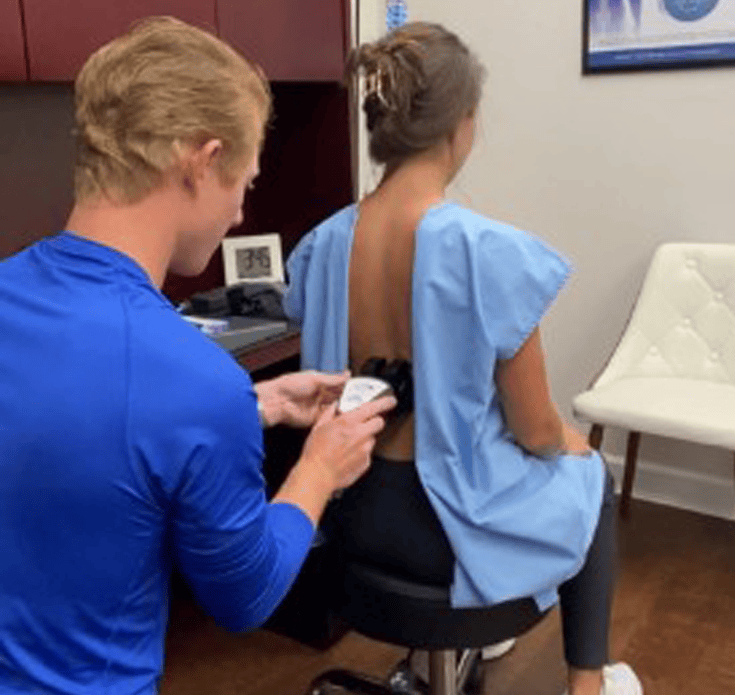
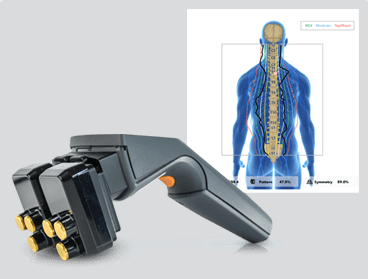
Doctor runs the neuro-core scan up the paraspinal muscles of your spine
Non-invasive test that you do not feel
Measures the tone of muscles along the entire spine, accurately and reliably
Interprets and reports scan results using distribution graphs and energy scores
Pinpoints overactive and exhausted neuromuscular areas
Phase Four
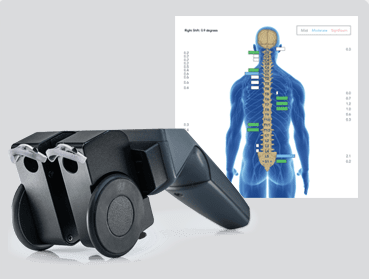
Doctor runs neuro-thermal scan up the paraspinal mucles of the spine
Non-invasive test that you do not feel
Measures spinal nerve control of organs and glands
Uses infrared technology to identify areas with poor autonomic regulation
Rolling or segmental scanning modes show how stress patterns are changing
Phase Five
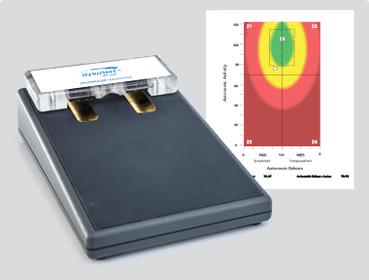
Doctor performs neuro-pulse scan by clipping a non-invasive heart rate monitor on your finger or ear
Non-invasive test that you do not feel
Scans heart rate, temperature and anxiety simultaneously, to calculate Heart Rate Variability (HRV)
Measures balance and activity levels of the Autonomic Nervous System
Reports and tracks stress levels and adaptability
Ear-clip feature allows for easy pediatric assessments
Phase Six
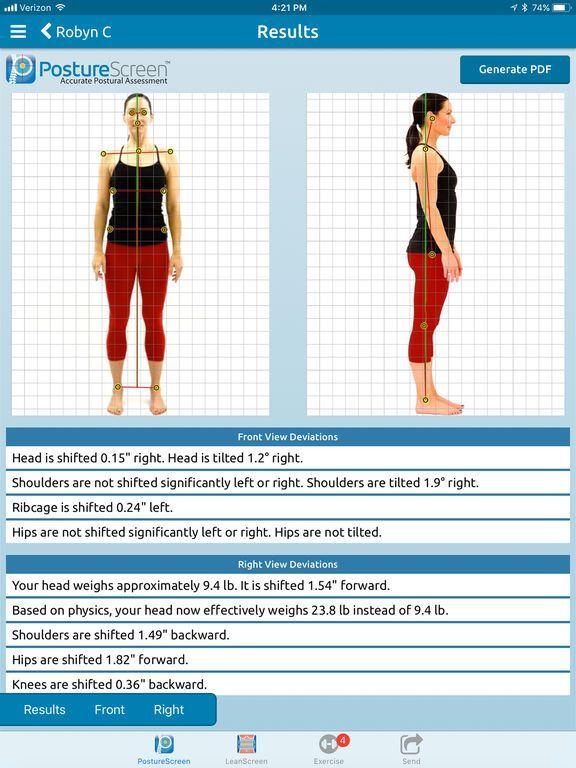
Postural Analysis & Weight Distribution
The doctor measures how your body distributes weight and where your posture is loading unevenly, side to side and front to back.
This analysis identifies imbalances and asymmetries that place extra stress on the spine, joints, and supporting muscles.
The findings help the doctors determine which corrective exercises to prescribe for your specific care plan.
It is a simple, non-invasive assessment that also helps track your postural progress over time.
Final Phase
Imaging
If the doctors see fit, you may be recommended digital radiographs in order for the doctor to get a deeper understanding and view of your spine and nervous system
Digital radiographs are performed in the studio and take approximately 2 minutes per region
You may be recommended full spine x-rays which would include cervical, thoracic and lumbo-sacral regions
Chiropractic x-rays are very low-dose radiation as bones are the first thing to show up on a x-ray
After the Exam
The doctor will need 24 hours to analyze the results of your consultation and examination. You will then be scheduled for a follow-up appointment.
At the follow-up appointment, the doctor will review the results of your examination, interpreting these results and radiographs with you ensuring that you fully understand. You will also receive hard copies of all of the results (see below for examples).
The doctor will then give you recommendations of care. These recommendations will cover adjustment schedule and frequency, insurance coverage and any out of pocket costs.
If recommended, you will also receive your first chiropractic adjustment on this same follow-up appointment.